

Canned Tuna Market to Reach USD 27.48 Billion by 2035 Amid Rising Demand for Shelf-Stable Protein
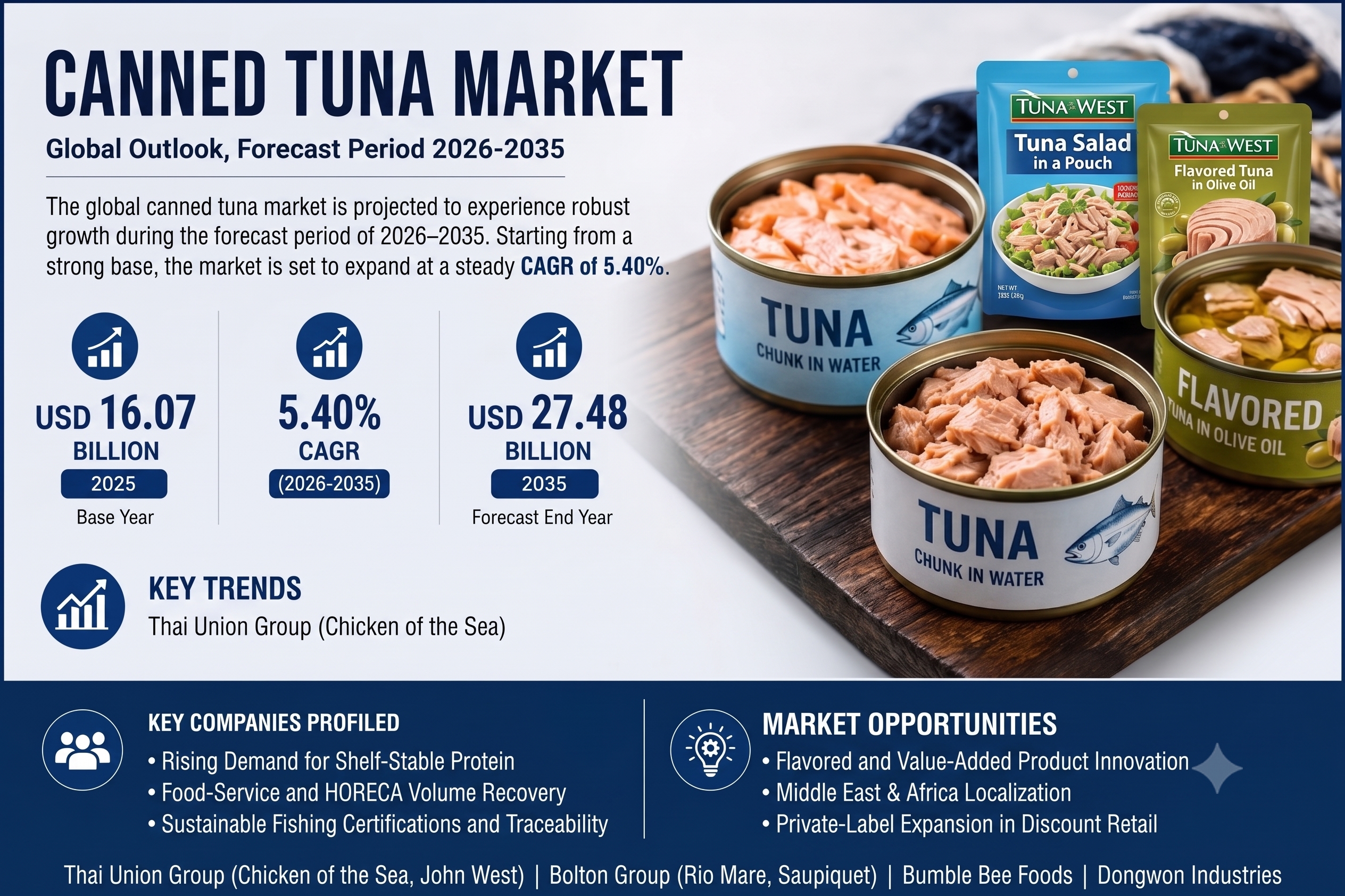
Canned Tuna Market
Canned tuna market is projected to grow at a 5.40% CAGR through 2035, driven by protein demand, sustainability initiatives, and value-added product innovation.
The canned tuna market is gaining momentum as demand for shelf-stable protein, sustainable sourcing, product innovation, and expanding retail channels continue driving long-term global growth.”
NEW YORK, NY, UNITED STATES, July 17, 2026 /EINPresswire.com/ -- The global Canned Tuna Market is poised for steady expansion over the next decade as consumers increasingly seek convenient, affordable, and protein-rich food products. According to Market Research Future (MRFR), the market was valued at USD 16.07 Billion in 2025 and is projected to reach USD 27.48 Billion by 2035, registering a compound annual growth rate (CAGR) of 5.40% during the forecast period of 2026–2035. Over the same period, the market is expected to add more than USD 11.4 Billion in incremental value, reflecting the continued strength of canned tuna as a mainstream packaged seafood category across retail and food-service channels.— Market Research Future (MRFR)
The market's sustained growth reflects changing consumer lifestyles, increasing demand for shelf-stable foods, expanding retail distribution networks, and growing awareness of seafood as a healthy protein source. Canned tuna continues to serve as one of the world's most widely consumed seafood products due to its long shelf life, affordability, nutritional profile, and convenience for households, food-service operators, and institutional buyers. Demand is also being reinforced by the broader shift toward high-protein diets, meal-prep culture, and practical pantry staples that can support quick meal preparation without sacrificing nutrition.
Global Market Overview
The canned tuna industry has evolved significantly over the past decade. Once viewed primarily as a pantry staple, canned tuna has become a versatile protein ingredient used in ready-to-eat meals, salads, sandwiches, pasta dishes, meal kits, and premium convenience foods. This evolution has broadened the category’s appeal beyond traditional household consumption and positioned it as a flexible ingredient for both everyday meals and premium food applications.
Consumers across developed and emerging economies are increasingly prioritizing foods that combine nutrition, convenience, and affordability. Busy lifestyles, rising urbanization, dual-income households, and higher demand for quick meal solutions continue to strengthen demand for canned seafood products. In many markets, canned tuna is also benefiting from its role as a low-preparation protein source that can be stored for long periods, making it attractive to consumers seeking both value and reliability.
At the same time, manufacturers are investing heavily in premium product positioning, sustainable sourcing, improved packaging technologies, and innovative flavor profiles to attract younger consumers and health-conscious buyers. The category is no longer limited to basic tuna packs; instead, it is increasingly defined by differentiated offerings such as flavored tuna, olive oil-packed tuna, ready-to-eat snack formats, and products tailored to specific dietary preferences.
The forecast period from 2026 to 2035 is expected to witness continued investment across production capacity, sustainable fishing practices, product innovation, and global distribution infrastructure. As competition intensifies, companies that can combine affordability with traceability, quality, and convenience are likely to gain stronger market traction.
Key Market Highlights
• Market Size (2025): USD 16.07 Billion
• Forecast Market Size (2035): USD 27.48 Billion
• Forecast CAGR (2026–2035): 5.40%
• Absolute Growth Opportunity: More than USD 11.4 Billion in new market value
• Market Scope: Global production, processing, packaging, distribution, and retail sales of canned tuna products
• Primary Growth Driver: Rising demand for shelf-stable protein
• Major Industry Trend: Sustainable fishing certifications and traceability
• Emerging Opportunity: Flavored and value-added canned tuna products
• High-Potential Region: Middle East & Africa localization
• Retail Opportunity: Rapid expansion of private-label offerings
These indicators reflect a resilient food category that continues to adapt to changing consumer preferences while maintaining its position as one of the largest packaged seafood segments globally. The market’s long-term outlook is supported by stable consumption patterns, broad retail penetration, and the ability of canned tuna to serve multiple use cases across households, food-service operators, and institutional buyers.
Get Full PDF Sample Copy of Report: (Including Full TOC, List of Tables & Figures, Chart) @ https://www.marketresearchfuture.com/sample_request/10335
Rising Demand for Shelf-Stable Protein Drives Market Expansion
One of the strongest growth drivers shaping the canned tuna market is the global shift toward shelf-stable protein products.
Consumers increasingly value foods that require minimal preparation while offering high nutritional value. Canned tuna provides an ideal combination of lean protein, omega-3 fatty acids, vitamins, minerals, and extended shelf life without refrigeration before opening. This makes it especially attractive in markets where consumers are balancing rising food costs, time constraints, and the need for practical meal solutions.
The growing popularity of meal prepping, emergency food storage, outdoor recreation, workplace lunches, and convenient home cooking has further strengthened demand. Canned tuna is widely used in lunchboxes, quick salads, pasta dishes, sandwiches, wraps, and protein-focused snacks, making it one of the most versatile shelf-stable seafood products available.
During periods of supply chain uncertainty and food inflation, shelf-stable foods have become increasingly attractive to both consumers and retailers. As a result, canned tuna continues to enjoy stable household penetration across multiple income groups. Its affordability relative to many fresh seafood alternatives also supports repeat purchasing, particularly in price-sensitive markets where consumers seek dependable protein sources that fit within tighter household budgets.
Health and Nutrition Continue Supporting Consumption
Global awareness surrounding healthy eating habits has elevated seafood consumption.
Nutrition-conscious consumers are seeking foods rich in protein while containing relatively low levels of saturated fat. Tuna remains one of the preferred seafood choices among athletes, fitness enthusiasts, working professionals, and families seeking healthier meal alternatives. Its nutritional profile aligns well with broader consumer interest in balanced diets, high-protein meal plans, and convenient foods that support active lifestyles.
Manufacturers are increasingly promoting nutritional transparency, cleaner ingredient lists, lower sodium formulations, and products packed in olive oil or spring water to align with evolving consumer expectations. These product attributes are particularly important in premium retail channels, where consumers are willing to pay more for perceived quality, cleaner labeling, and healthier formulations.
The market is also benefiting from increased demand for Mediterranean diets, high-protein diets, and balanced nutritional lifestyles. As consumers become more selective about the foods they purchase, canned tuna’s combination of convenience and nutrition continues to strengthen its position as a pantry essential.
Sustainability Becomes a Competitive Differentiator
Environmental sustainability has become one of the defining themes of the global canned tuna industry.
Consumers increasingly expect seafood brands to demonstrate responsible sourcing practices, ethical fishing methods, and environmental stewardship. This expectation is influencing purchasing decisions across supermarkets, specialty retailers, food-service buyers, and institutional procurement channels.
Major manufacturers continue investing in:
• Sustainable fishing certifications
• Full supply chain traceability
• Digital catch verification
• Reduced bycatch initiatives
• Ocean conservation partnerships
• Responsible packaging materials
Retailers and institutional buyers are also placing greater emphasis on sourcing products certified through internationally recognized sustainability standards. In many markets, sustainability credentials are no longer viewed as optional marketing features but as essential requirements for maintaining shelf space and consumer trust.
As regulatory scrutiny and consumer awareness continue increasing, companies capable of demonstrating transparent sourcing practices are expected to strengthen their competitive positions. Sustainability is also becoming a key differentiator in premium product segments, where consumers often associate certified sourcing with higher quality and stronger brand integrity.
Food-Service Recovery Creates New Growth Opportunities
The gradual recovery of global food-service, hospitality, and HORECA channels represents another important market driver.
Hotels, restaurants, cafés, catering companies, educational institutions, airlines, and commercial kitchens increasingly utilize canned tuna because of its convenience, consistency, and cost-effectiveness. For operators managing large volumes and tight margins, canned tuna offers a reliable ingredient that can be incorporated into a wide range of menu applications without requiring complex preparation or cold-chain dependence.
As tourism, travel, and hospitality continue recovering worldwide, institutional demand for canned seafood products is expected to rise steadily throughout the forecast period. Food manufacturers are also incorporating canned tuna into prepared meals, frozen foods, wraps, pizzas, salads, sandwiches, and ready-to-eat offerings, expanding commercial consumption beyond retail channels.
This recovery is particularly important because food-service demand often supports higher-volume purchasing and broader product visibility. As a result, the rebound in HORECA activity is expected to complement retail growth and contribute to a more balanced demand profile across the industry.
Innovation Reshapes the Product Landscape
Product innovation continues transforming the competitive landscape.
Manufacturers are moving beyond traditional canned tuna products by introducing premium, flavored, and convenience-oriented offerings. This shift is helping the category appeal to younger consumers, busy professionals, and shoppers looking for more variety in everyday protein choices.
Popular innovations include:
• Lemon pepper tuna
• Chili-infused tuna
• Mediterranean herb recipes
• Smoked tuna varieties
• Ready-to-eat tuna salads
• Tuna snack cups
• High-protein meal kits
• Premium olive oil packed tuna
These innovations target younger consumers seeking healthier snack options while helping brands differentiate themselves within an increasingly competitive retail environment. They also support premiumization, allowing manufacturers to command stronger margins in selected channels.
Convenient packaging formats such as easy-open lids, resealable containers, microwave-friendly products, and portable single-serving packs are also gaining popularity. Packaging innovation is especially important in urban markets and among on-the-go consumers who prioritize portability, freshness, and ease of use.
Private-Label Expansion Accelerates Retail Competition
Private-label brands continue expanding across supermarkets, warehouse clubs, and discount retailers.
Retailers increasingly recognize canned tuna as a strategic category for offering competitively priced, high-quality alternatives to national brands. Because canned tuna is a repeat-purchase staple, it provides retailers with an opportunity to build loyalty while protecting margins through in-house branding.
Private-label products have improved significantly in quality, packaging, and sustainability credentials, allowing retailers to capture greater market share while providing consumers with attractive value propositions. In many cases, private-label tuna now competes directly with branded products on taste, sourcing, and packaging quality, narrowing the historical gap between store brands and leading manufacturers.
Discount retail expansion across Europe, North America, and emerging markets is expected to further strengthen private-label growth during the forecast period. As inflation-sensitive consumers continue seeking value, private-label tuna is likely to remain a strong performer in price-conscious retail environments.
Regional Outlook
The canned tuna market demonstrates strong global demand supported by diverse consumption patterns.
North America remains a mature market characterized by high household penetration and premium product innovation. Consumers in the region are increasingly drawn to convenient protein options, clean-label products, and sustainable sourcing claims, while retailers continue expanding premium and private-label assortments.
Europe continues emphasizing sustainability, certified fisheries, premium quality, and private-label expansion. The region’s strong regulatory environment and consumer preference for traceable seafood products are encouraging manufacturers to invest in responsible sourcing and differentiated product positioning.
Asia-Pacific benefits from significant seafood production capabilities, strong export infrastructure, and rising domestic consumption fueled by expanding middle-class populations. The region also serves as a major production and processing hub for global tuna supply chains, supporting both local consumption and international trade.
Latin America continues strengthening both production and export opportunities due to favorable fishing resources. The region’s role in global tuna supply is expected to remain important as manufacturers seek efficient sourcing and processing bases.
Meanwhile, the Middle East & Africa represents one of the most promising long-term opportunities as manufacturers pursue localized production, regional partnerships, and broader retail distribution. Increasing urbanization, population growth, and changing dietary habits are expected to support demand throughout the region. Localization strategies are likely to become increasingly important in this market as companies adapt products, packaging, and pricing to regional consumer preferences.
Competitive Landscape
The global canned tuna market remains highly competitive, with leading multinational seafood companies investing in sustainable sourcing, product innovation, supply chain optimization, and global brand expansion.
Major companies profiled include:
• Thai Union Group (Chicken of the Sea, John West)
• Bolton Group (Rio Mare, Saupiquet)
• Bumble Bee Foods
• Dongwon Industries
These companies continue strengthening their positions through acquisitions, product diversification, sustainability initiatives, and investments in processing technologies. Their strategies increasingly focus on balancing scale with differentiation, particularly in premium and value-added product categories.
Competitive differentiation increasingly depends on brand reputation, responsible sourcing, premium product development, distribution capabilities, and pricing strategies. Companies that can maintain consistent quality while responding to consumer demand for sustainability and convenience are expected to remain well positioned over the forecast period.
Industry Outlook Through 2035
The canned tuna market is expected to maintain stable long-term growth supported by rising global protein consumption, expanding retail infrastructure, evolving consumer lifestyles, and continuous product innovation.
As sustainability standards become increasingly important, companies investing in certified fisheries, traceable supply chains, environmentally responsible packaging, and premium consumer experiences are expected to capture larger market shares. The market’s future will likely be shaped by the ability of manufacturers to combine operational efficiency with consumer-facing innovation.
Manufacturers that successfully balance affordability, nutrition, sustainability, and convenience will be well positioned to benefit from growing global demand. The category’s resilience is reinforced by its broad appeal across income groups, geographies, and consumption occasions, making it one of the most dependable packaged seafood segments in the global food industry.
With the market forecast to expand from USD 16.07 Billion in 2025 to USD 27.48 Billion by 2035, canned tuna remains one of the world's most resilient packaged food categories, supported by strong fundamentals and consistent consumer demand across both developed and emerging economies.
Discover Related Research Reports By Market Research Future:
Canned Seafood Market https://www.marketresearchfuture.com/reports/canned-seafood-market-6703
Canned Salmon Market https://www.marketresearchfuture.com/reports/canned-salmon-market-24351
Seafood Processing Market https://www.marketresearchfuture.com/reports/seafood-processing-market-8612
Sagar Kadam
Market Research Future
+1 628-258-0071
email us here
Legal Disclaimer:
EIN Presswire provides this news content "as is" without warranty of any kind. We do not accept any responsibility or liability for the accuracy, content, images, videos, licenses, completeness, legality, or reliability of the information contained in this article. If you have any complaints or copyright issues related to this article, kindly contact the author above.
